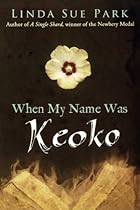
When My Name Was Keoko
| Author | : | |
| Rating | : | 4.16 (819 Votes) |
| Asin | : | 0547722397 |
| Format Type | : | paperback |
| Number of Pages | : | 208 Pages |
| Publish Date | : | 2015-12-01 |
| Language | : | English |

DESCRIPTION:
"When My Name Was Keoko by Linda Sue Park" according to S. K.. This is the story of five years in the life of a Korean family during the Japanese occupation of their homeland at the beginning of WWII. They were determined to maintain their Korean identity under the noses of the Japanese soldiers who intended to destroy their nation. All Koreans were forced to adopt Japanese names--hence the title: Kim Sun-hee became Keoko during this time. Set in Korea from 19When My Name Was Keoko by Linda Sue Park S. K. This is the story of five years in the life of a Korean family during the Japanese occupation of their homeland at the beginning of WWII. They were determined to maintain their Korean identity under the noses of the Japanese soldiers who intended to destroy their nation. All Koreans were forced to adopt Japanese names--hence the title: Kim Sun-hee became Keoko during this time. Set in Korea from 1940 to 1945, the story is told alternately by the 10-year old daughter and her 13 year old brother. There are elements of stifled . 0 to 19When My Name Was Keoko by Linda Sue Park S. K. This is the story of five years in the life of a Korean family during the Japanese occupation of their homeland at the beginning of WWII. They were determined to maintain their Korean identity under the noses of the Japanese soldiers who intended to destroy their nation. All Koreans were forced to adopt Japanese names--hence the title: Kim Sun-hee became Keoko during this time. Set in Korea from 1940 to 1945, the story is told alternately by the 10-year old daughter and her 13 year old brother. There are elements of stifled . 5, the story is told alternately by the 10-year old daughter and her 1When My Name Was Keoko by Linda Sue Park This is the story of five years in the life of a Korean family during the Japanese occupation of their homeland at the beginning of WWII. They were determined to maintain their Korean identity under the noses of the Japanese soldiers who intended to destroy their nation. All Koreans were forced to adopt Japanese names--hence the title: Kim Sun-hee became Keoko during this time. Set in Korea from 19When My Name Was Keoko by Linda Sue Park S. K. This is the story of five years in the life of a Korean family during the Japanese occupation of their homeland at the beginning of WWII. They were determined to maintain their Korean identity under the noses of the Japanese soldiers who intended to destroy their nation. All Koreans were forced to adopt Japanese names--hence the title: Kim Sun-hee became Keoko during this time. Set in Korea from 1940 to 1945, the story is told alternately by the 10-year old daughter and her 13 year old brother. There are elements of stifled . 0 to 19When My Name Was Keoko by Linda Sue Park S. K. This is the story of five years in the life of a Korean family during the Japanese occupation of their homeland at the beginning of WWII. They were determined to maintain their Korean identity under the noses of the Japanese soldiers who intended to destroy their nation. All Koreans were forced to adopt Japanese names--hence the title: Kim Sun-hee became Keoko during this time. Set in Korea from 1940 to 1945, the story is told alternately by the 10-year old daughter and her 13 year old brother. There are elements of stifled . 5, the story is told alternately by the 10-year old daughter and her 13 year old brother. There are elements of stifled . year old brother. There are elements of stifled . "Not amazing or deep really just novel." according to aQuixRuby. It was a novel way to tell the story. It is valid because men and women really do experience things differently in Korea even today.. Five Stars Very good
The Kim family is stripped of their cultural symbols, only permitted to learn Japanese history and language, and forced to convert their names to Japanese. In alternating first-person chapters, they relate their family's troubles under the strict fascist regime. Both are worried for their uncle, whom they discover is printing an underground Korean resistance paper. While Sun-hee and her parents wait in breathless uncertainty to hear from Tae-yul, the war rushes to a close, leaving Korea's destiny hanging in the balance. Inspired by her own family'
When World War Ii comes to Korea, Sun-hee is surprised that the Japanese expect their Korean subjects to fight on their side. But the greatest shock of all comes when Tae-yul enlists in the Japanese army in an attempt to protect Uncle, who is suspected of aiding the Korean resistance. Their own language, their flag, the folktales Uncle tells them-even their names-are all part of the Korean culture that is now forbidden. Because Korea is under Japanese occupation, the children study Japanese and speak it at school. Sun-hee stays behind, entrusted with the life-and-death secrets of a family at war.. Sun-hee and her older brother, Tae-yul, live in Korea with their parents