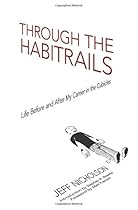
Through the Habitrails: Life Before and After My Career in the Cubicles (Dover Graphic Novels)
| Author | : | |
| Rating | : | 4.40 (928 Votes) |
| Asin | : | 0486802868 |
| Format Type | : | paperback |
| Number of Pages | : | 144 Pages |
| Publish Date | : | 2017-07-01 |
| Language | : | English |

DESCRIPTION:
Although these stories seem to take place out of order, they build toward an emotionally draining, yet strangely optimistic and fatalistic conclusion. Most of the characters are drawn without mouths and with near-expressionless eyes in stark, simplistic black and white; the effect is chilling. The 14 vignettes in Through the Habitrails are not so much linear chapters as they are atmospheric stepping stones to another world. In this existential work, a nameless protagonist floats through his banal life of inactivity in a mindless job.
Dehumanizing office work (4.5 stars) Alt Through the Habitrails is a surrealistic take on the dehumanizing effect of office work, sort of a dark version of Dilbert. Yes, it’s a cubical book. It was first published in 1996 and the stories were drawn before that, some years before the movie Office Space made fun of life in a cube.The narrator (who works as an artist/designer for his corporate employer) sometimes has a large jar full of beer covering his head. The corporation literally drains the creative juices from his body. Another employee c. "Very weird, weirdly disturbing, disturbingly amusing stories of cubicle life" according to Paul Mastin. Jeff Nicholson says Through the Habitrails: Life Before and After My Career in the Cubicles really isn't autobiographical. All the better for him. His graphic novel, published serially and intermittently through the 1990s, presents a creepy, bleak, and dehumanizing picture of corporate life.Our protagonist slaves in his cubicle creating content, while the gerbils, who somehow run the place, run around in their habitrails. People sneak up behind him and slap on tap on his head to sap his creative juices. In o. Brilliant work, flawed presentation Carl J. Antonowicz "Through the Habitrails" is an important work in the history of comics, the lackluster presentation of this volume notwithstanding. Nicholson's narrative is one of utter white collar despair, one that should be intimately familiar to anyone who has worked in the creative industry, as Stephen Bissette, who published "Habitrails" in installments in his legendary horror anthology Taboo, aptly points out in his introduction. Bissette also draws comparisons to Mike Judge's "Office Space" and the American version
"A magnificent piece of work." Dave SimThis collection of darkly humorous tales chronicles a nameless protagonist's struggle with a stultifying routine of office drudgery. Bissette as "one of the seminal graphic novels of the 1990s," Through the Habitrails features semi-autobiographical vignettes that include "Futile Love," "The Doomed One," "The Infiltrator," "The Dark Spiral," "The Gerbil King," and the "Escape" trilogy, one part of which was a 1993 Eisner Award nominee.Exclusive Bonus Material contains a new Epilogue, written and illustrated by the author, and a new Foreword by multiple Eisner Award winner Matt Fraction.. The stories' Kafkaesque vignettes, portrayed in striking black-and-white drawings, offer eerie perspectives on the rigors of everyday life.Author Jeff Nicholson is best known as the creator of Ultra Klutz, Lost Laughter, Father & Son, and Colonia. Praised by comics artist and publisher Stephen R