The Intersectional Internet: Race, Sex, Class, and Culture Online (Digital Formations)
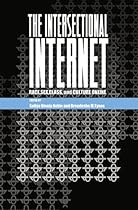
| Author | : | |
| Rating | : | 4.30 (767 Votes) |
| Asin | : | 1433130017 |
| Format Type | : | paperback |
| Number of Pages | : | 278 Pages |
| Publish Date | : | 2015-04-17 |
| Language | : | English |

DESCRIPTION:
By looking at both the broader political and economic context and the many digital technology acculturation processes as they are differentiated intersectionally, a clearer picture emerges of how under-acknowledging culturally situated and gendered information technologies are impacting the possibility of participation with (or purposeful abstinence from) the Internet. It is also ideal for researchers with varying expertise and will help to advance theoretical and methodological approaches to Internet research.. This book is ideal for undergraduate and graduate courses in Internet studies, library and information studies, communication, sociology, and psychology. From race, sex, class, and culture, the multidisciplinary field of Internet studies needs theoretical and methodological approaches that allow us to question the organization of social relations that are embedded in digital technologies, and that foster a clearer understanding of how power relations are organized through technologies. These inquiries include, among others, how representation to hardware, software, computer code, and infrastructures might be implicated in global economic, political, and social systems of control. Contributors argue that more research needs to explicitly trace the types of uneven power relations that exist in technological spac
smoog said Five Stars. This book is amazing.
Tynes (PhD, UCLA) is Associate Professor of Education and Psychology at the University of Southern California. She is co-editor of Emotions, Technology, and Design (2016) and an editorial board member of the Journal of Critical Library and Information Studies. Brendesha M. Safiya Umoja Noble (PhD, University of Illinois at Urbana-Champaign) is an assistant professor in the Department of In
She is co-editor of Emotions, Technology, and Design (2016) and an editorial board member of the Journal of Critical Library and Information Studies. Brendesha M. Tynes (PhD, UCLA) is Associate Professor of Education and Psychology at the University of Southern California. . About the Author Safiya Umoja Noble (PhD, University of Illinois at Urbana-Champaign) is an assistant professor in the Department of Information Studies in the Graduate School of Education and Information Studies at UCLA. She is the recipient of the American Educational Research Association Early Career Award and the Spencer Foundation Midcareer Award