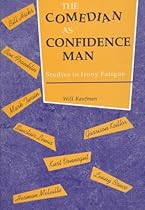
The Comedian as Confidence Man: Studies in Irony Fatigue (Humor in Life and Letters Series)
| Author | : | |
| Rating | : | 4.40 (892 Votes) |
| Asin | : | 0814326579 |
| Format Type | : | paperback |
| Number of Pages | : | 272 Pages |
| Publish Date | : | 2013-02-28 |
| Language | : | English |

DESCRIPTION:
I bought it so I could feel superior to other creepy fans Doug Stanhope mentioned this book in an NPR interview. I bought it so I could feel superior to other creepy fans. Haven't even read it. []
in American Literature from the University of Wales, Aberystwyth. Will Kaufman, a senior lecturer in American Studies at the University of Central Lancashire in Preston, England, received his Ph.D.
The Comedian As Confidence Man is a lively, fascinating analysis of humorists and their work which examines the humorist's internal conflict between the social critic who demands to be taken seriously and the comedian who never can be -- the irony fatigue condition. Original, scholarly, witty, The Comedian As Confidence Man is highly recommended reading. The Comedian As Confidence Man concludes with the political philosophy of John Seery, Richard Rorty, Linda Hutcheon, Thomas Mann, and others. -- Midwest Book Review. The Comedian As Confidence Man concentrates on eight American literary and performing comedians from the 18th, 19th, and 20th centuries, whose social observations require the obligatory, "Only kidding, folks!" even when they may not be. The Comedian As Confidence Man explores the problems of irony and irony fatigue through the work of Ben Franklin, Mark Twain, Sinclair Lewis, Garrison Ke
Shaw's words, they must "put things in such a way as to make people who would otherwise hang them believe they are joking." If these social observers are obliged to become, in effect, confidence men, with irony as the satiric weapon that both attacks and diverts, then the implications are great for those social critics who above all wish to be heeded.. Concentrating on eight American literary and performing comedians from the 18th, 19th, and 20th centuries, this study explores the irony fatigue affect that seems to pervade the work of comedians-those particular social observers who are obliged to promise, "Only kidding, folks," even when they may not be; in G. B. In this lively and fascinating analysis of humorists and their work, Will Kaufman breaks new ground with his irony fatigue theory. The Comedian as Confidence Man examines the humorist's internal conflict between the social critic who demands to be taken seriously and the comedian who never can be: the irony fatigue condition