Personality in Adulthood, Second Edition: A Five-Factor Theory Perspective
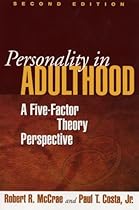
| Author | : | |
| Rating | : | 4.70 (931 Votes) |
| Asin | : | 1593852606 |
| Format Type | : | paperback |
| Number of Pages | : | 268 Pages |
| Publish Date | : | 2014-09-17 |
| Language | : | English |

DESCRIPTION:
It will be a highly useful book, especially for those wishing to be informed about the current status of the Five-Factor Model of personality."/m-/David M. Little background in psychology or gerontology is assumed, and research methods and statistics are introduced and explained along the way. "This is an important updating of the first edition. It will also serve well as a secondary text for upper-level undergraduate- and graduate-level courses in personality and developmental psychology."--David Funder, PhD, Department of Psychology, University of California, Riverside"McCrae and Costa have done an outstanding job of bringing their book up to date while rethinking and expanding their conclusions. The last dozen years have seen an explosion of relevan
Good introduction to the `Big 5' model and personality development Chapter 1 describes the well-known `Five Factor Model' (FFM) of personality traits and the robust result that in most people, personality changes little after the age of 30. Other theories of adulthood in the work of Freud, Jung, Erikson and others are also reviewed.Chapter 2 is an interesting tutorial on the trait approach to personality, which the authors did so much to develop and popularise. Chapter 3 continues the theme by outlining the issues involved in m. doc said CLASSIC WORK. This book offers an in-depth approach that is perfect for anyone interested in personality theory--it is appropriate for undergraduate, graduate, and post-graduate individuals as it provides sound research-based evidence supporting Costa and McCrae's five-factor model of personality.. S. J. Gerras said Great Book. This was the best of many books I've read on the Big Five personality factors. Absolutely excellent.
This influential work examines how enduring dispositions or traits affect the process of aging and shape each individual’s life course. Critically reviewing different theories of personality and adult development, the authors explain the logic behind the scientific assessment of personality, present a comprehensive model of trait structure, and examine patterns of trait stability and change after age 30, incorporating data from ongoing cross-sectional and longitudinal studies. Written in a clear, jargon-free style, this book is an ideal text for advanced studen