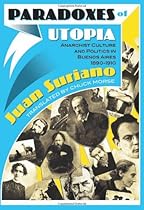
Paradoxes of Utopia: Anarchist Culture and Politics in Buenos Aires, 1890-1910
| Author | : | |
| Rating | : | 4.67 (837 Votes) |
| Asin | : | 184935006X |
| Format Type | : | paperback |
| Number of Pages | : | 288 Pages |
| Publish Date | : | 2018-01-06 |
| Language | : | English |

DESCRIPTION:
I'm in love with this book!!! Instead of focusing just on trade union politics, "Paradoxes of Utopia" offers us an exciting glimpse of the visionary cultural aspects of the anarchist movement in early 20th century Buenos Aires. A superb historian, Juan Suriano vividly brings to life the radical theaters, free schools, newspapers, and social organizations of the times, showing us the movement's deep concern for things like rational education, atheism, free love, feminism, anti-militarism, sobriety, and. excellent This is THE most comprehensive treatment of the heyday of Argentine anarchism in any language. It is scholarly, informed, and compelling.
Juan Suriano is professor of Social History in the department of Philosophy and Letters at the University of Buenos Aires, the director and publisher of the historical magazine Entrepasados, director of the New Argentine History collection, and author of La huelga de inquilinos de 1907 en Buenos Aires and La cuestión social en Argentina, 1870-1943, among other titles.
About the AuthorJuan Suriano is professor of Social History in the department of Philosophy and Letters at the University of Buenos Aires, the director and publisher of the historical magazine Entrepasados, director of the New Argentine History collection, and author of La huelga de inquilinos de 1907 en Buenos Aires and La cuestión social en Argentina, 1870-1943, among other titles.
Cultural history in the best sense, Paradoxes of Utopia explores how a revolutionary ideology was woven into the ordinary lives of tens of thousands of people, creating a complex tapestry of symbols, rituals, and daily practices that supportedand indeed created the possibility ofthe Argentine labor movement.Juan Suriano is a professor of social history at the University of Buenos Aires.. An engaging historical look at fin de siécle Buenos Aires that brings to life the vibrant culture behind one of the world’s largest anarchist movements: the radical schools, newspapers, theaters, and social clubs that made revolution a way of life