Melanie Klein
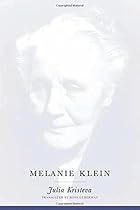
| Author | : | |
| Rating | : | 4.77 (723 Votes) |
| Asin | : | 0231122845 |
| Format Type | : | paperback |
| Number of Pages | : | 304 Pages |
| Publish Date | : | 2014-10-17 |
| Language | : | French |

DESCRIPTION:
of Medicine, Washington, DC Copyright 2001 Reed Business Information, Inc. E. James Lieberman, George Washington Univ. of Paris). Her contribution came via analysis of her own children and emphasized the darker side of object relations: envy, sadism, and Thanatos. This intellectual biography is the second volume of "Female Genius: Life, Madness, Words," a trilogy by psychoanalyst and critic Kristeva (linguistics, Univ. From Library Journal Klein (1882-1960) was internationally known as the mother of child analysis and a reformer in the field of Freudian psychoanalysis. Kristeva, a formidable cultural historian and critic, brings a rich mix of data and ideas for psychoanalytic theorists, but Phyllis Grosskurth's Melanie Klein: Her World and Her Work (Jason Aronson, 1995) is much more suited to the general reader. She was born in Hungary, trained in Berlin, and had great influence in England after emigrating there, dividing the psychoanalytic profession between
Lilith said Five Stars. It's pretty accessible, relative to Kristeva's earlier work.. "Intellectual tripe." according to Amazon Customer. I expected that if Julia Kristeva was going to write a book that analysed Melanie Klein's ideas that she would do so in a manner that respected those ideas and not impose her own Lacanian linguistic framework. Unfortunately I was wrong. Melanie Klein developed her work as an outgrowth of the findings of Sigmund Freud, Sandor Ferenczi and Karl Abraham. These are the theoretical-mediational lenses she used as she developed her own ideas. Her whole wo. Kristeva is rare intellectual across many disaplines. As always David M. Moore Kristeva is rare intellectual across many disaplines. As always she brings depth and clarity to an important psychoanalytic clinician just as she has done with Proust and so many others.At
Julia Kristeva is an internationally known psychoanalyst and critic and is professor of linguistics at the University of Paris VII. She is the author of many highly regarded books published by Columbia in translation, including Hannah Arendt, Strangers to Ourselves, New Maladies of the Soul, Time and Sense, and The Sense and Non-Sense of Revolt.
In examining her work, Kristeva proposes that Klein's "break" with Freud was really an attempt to complete his theory of the unconscious. To the renowned psychoanalyst, philosopher, and linguist Julia Kristeva, Melanie Klein (1882–1960) was the most original innovator, male or female, in the psychoanalytic arena. Klein pioneered psychoanalytic practice with children and made major contributions to our understanding of both psychosis and autism. Klein is celebrated here as the first person to see the mother as the source of not only creativity, but of thought itself, and the first to consider the place of matricide in psychic development. Klein is thus, in a sense, a mother to Kristeva, making this book an account of the development of Kristeva's own thought as well as Klein's.. Kristeva tells the remarkable story of Klein's