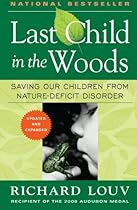
Last Child in the Woods: Saving Our Children From Nature-Deficit Disorder
| Author | : | |
| Rating | : | 4.51 (920 Votes) |
| Asin | : | 156512605X |
| Format Type | : | paperback |
| Number of Pages | : | 416 Pages |
| Publish Date | : | 2014-07-21 |
| Language | : | English |

DESCRIPTION:
Totally missed the obvious Sam Thayer I liked the author's ideas, and his arguments, and agree wholeheartedly with his sentiment. I think he's a great person, and I'm glad this book brought this very important issue into the public discussion. However, he totally missed the root cause of the problem he is addressing, and thereby missed the answer to the dilemma. Children don't spend enough time in Nature because adults don't. If we want our children to value Nature and experience it, we must. They are just modeling our behavior. As a Nature educator, I have grown to . Saving Children from Our Best Intentions Fritz R. Ward When I was growing up in Boise Idaho, I thought nothing of spending an afternoon away from my parents fishing ponds along the Boise River. As I graduated to fly fishing, I spent time on the river itself. Closer to home, the canal which ran below South Federal Way offered a miniature green belt where my friends and I built forts and rode bikes. Urban as Boise was, even then, this tiny greenbelt was still sufficiently wild that I would occasionally find a porcupine in our front yard. Our cats were fairly adept at finding quail (and. Thought provoking This book was a bit heavy to get through at times. I did like the author's proposal of "Nature Deficit Disorder" and thought that there were some good points about how much society has changed in terms of the amount of unstructured outside time that children experience. Thought provoking reading that is backed up with research.
Last child in the Woods is the first book to bring together cutting-edge research showing that direct exposure to nature is essential for healthy childhood development-physical, emotional, and spiritual. This alienation damages children and shapes adults, families, and communities. Never before in history have children been so plugged in-and so out of touch with the natural world. Nature-deficit disorder is not a medical condition; it is a description of the human costs of alienation from nature. "I like to play indoors better 'cause that's where all the electrical outlets are," reports a fourth-grader. The rate at which doctors prescribe antidepressants to children has doubled in the last five years, and recent studies show that too much computer use spells trouble for the developing mind. Even creativity is stimulated by childhood experiences in nature.. In this groundbreaking new work, child advocacy expert Richard Louv directly links the lack of nature in the lives of today's wired generation-he calls it nature deficit-to some of the most disturbing childhood trends, such as rises in obesity, Attention Deficit Disorder (Add), and depression. There are solutions, though,
Not only can nature teach kids science and nurture their creativity, he says, nature needs its children: where else will its future stewards come from? Louv's book is a call to action, full of warnings—but also full of ideas for change. All rights reserved.. Agent, James Levine. From Publishers WeeklyToday's kids are increasingly disconnected from the natural world, says child advocacy expert Louv (Childhood's Future; Fatherlove; etc.), even as research shows that "thoughtful exposure of youngsters to nature can be a powerful form of therapy for attention-deficit disorder and other maladies." Instead of passing summer months hiking, swimming and telling stories around the campfire, children these days ar