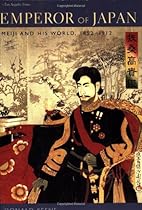
Emperor of Japan: Meiji and His World, 1852-1912
| Author | : | |
| Rating | : | 4.77 (616 Votes) |
| Asin | : | 0231123418 |
| Format Type | : | paperback |
| Number of Pages | : | 928 Pages |
| Publish Date | : | 2015-04-17 |
| Language | : | English |

DESCRIPTION:
Later, during Japan's wars with China and Russia, we witness Meiji's struggle to reconcile his personal commitment to peace and his nation's increasingly militarized experience of modernization. Emperor of Japan conveys in sparkling prose the complexity of the man and offers an unrivaled portrait of Japan in a period of unique interest.. Before long, the shogun surrendered to the emperor, a new constitution was adopted, and Japan emerged as a modern, industrialized state. Even Japanese who believe Meiji to have been their nation's greatest ruler may have trouble recalling a single personal accomplishment that might account for such a glorious reputation. Renowned Japan scholar Donald Keene sifts the available evidence to present a rich portrait not only of Meiji but also of rapid and sometimes violent change during this pivotal period in Japan's history. In this vivid and engrossing biography, we move with the emperor through his early, traditional education; join in the formal processions that acquainted the young emperor with his country and its people; observe his behavior in court, his marriage,
"Five Stars" according to W. Beavers. Excellent. Michael McLaughlin said Excellent for scholars and casual readers alike. A fascinating account of the life, times, and deeds of a transformational Japanese emperor. I was particularly pleased by several things:- The background given of the reign and character of his father, Emperor Komei, early in the book;- The inclusion of the backgrounds of his key advisors, which helped provide context to their advic. "A very detailed book" according to Edin Sabanovic. For anyone looking to expand their knowledge of Early modern Japan and how sheembarked on the road to join modern countries, this is the book to read.
He lives in Tokyo and New York City.. Donald Keene is Shincho Professor of Japanese Literature and University Professor Emeritus at Columbia University. He is the author of more than thirty books, including the definitive multi-volume history of Japanese literature
Copyright © 2005 The New Yorker. By the end of his reign, in 1912, the country had become a cosmopolitan constitutional monarchy and a military superpower, defeating Russia and China. Keene gracefully marshals evidence to illuminate this astonishing transformation by focussing on the earnest, dutiful Emperor, whose Confucian conscience obliged him to wear a patched uniform and to live in comfortless and shabby rooms. Unflinchingly describing such episodes as the Port Arthur massacre, Keene also shows how Meiji's exercises of martial strength did not preclude a sincere distaste for war. From The New Yorker When Emperor Meiji ascended the throne, in 1867, Japan was a feudal, pre-industrial dictatorship, administered by sword-wielding samura