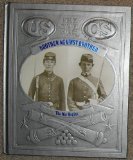
Brother Against Brother (Civil War)
| Author | : | |
| Rating | : | 4.18 (926 Votes) |
| Asin | : | 0809447002 |
| Format Type | : | paperback |
| Number of Pages | : | 176 Pages |
| Publish Date | : | 0000-00-00 |
| Language | : | English |

DESCRIPTION:
Et Al.. Brother Against Brother: The War Begins, by Davis, William C
Lawrance Bernabo said The first volume in the Time-Life series on The Civil War. This first volume in the Time-Life series on The Civil War begins with at look at "The Two Americas" in a series of contemporary paintings of a nation about to tear itself apart. Chapter 1, "One Nation, Divisible," sets up the slavery issue, from the establishment of the Mason-Dixon line to the Compromise of 1850, ending with a gallery of the noted abolitionists of the day. Chapter "The first volume in the Time-Life series on The Civil War" according to Lawrance Bernabo. This first volume in the Time-Life series on The Civil War begins with at look at "The Two Americas" in a series of contemporary paintings of a nation about to tear itself apart. Chapter 1, "One Nation, Divisible," sets up the slavery issue, from the establishment of the Mason-Dixon line to the Compromise of 1850, ending with a gallery of the noted abolitionists of the day. Chapter 2, "The Avenging Angel," focuses on the life and legacy of John Brown. Chapter The first volume in the Time-Life series on The Civil War This first volume in the Time-Life series on The Civil War begins with at look at "The Two Americas" in a series of contemporary paintings of a nation about to tear itself apart. Chapter 1, "One Nation, Divisible," sets up the slavery issue, from the establishment of the Mason-Dixon line to the Compromise of 1850, ending with a gallery of the noted abolitionists of the day. Chapter 2, "The Avenging Angel," focuses on the life and legacy of John Brown. Chapter 3, "Lincoln of Illinois," explains how Lincoln came to be the nominee of the Republican Party and won the Presidential election of 1860. Chap. , "Lincoln of Illinois," explains how Lincoln came to be the nominee of the Republican Party and won the Presidential election of 1860. Chap. , "The Avenging Angel," focuses on the life and legacy of John Brown. Chapter The first volume in the Time-Life series on The Civil War This first volume in the Time-Life series on The Civil War begins with at look at "The Two Americas" in a series of contemporary paintings of a nation about to tear itself apart. Chapter 1, "One Nation, Divisible," sets up the slavery issue, from the establishment of the Mason-Dixon line to the Compromise of 1850, ending with a gallery of the noted abolitionists of the day. Chapter 2, "The Avenging Angel," focuses on the life and legacy of John Brown. Chapter 3, "Lincoln of Illinois," explains how Lincoln came to be the nominee of the Republican Party and won the Presidential election of 1860. Chap. , "Lincoln of Illinois," explains how Lincoln came to be the nominee of the Republican Party and won the Presidential election of 1860. Chap. If you only read one book on the Civil War: this is it! A Customer I personally loved the book. I think it was very well written and contained many documented accounts of the war that I had not read before. I love statistics and the book contained a lot.The book explains the battles in detail. The only way you would get a more complete accounting is to read a book devoted to a single battle.I don't think you will make a mistake buying this book.. The origins of the Civil War James D. Crabtree The first in the Time-Life series on the Civil War, this book looks at what the root causes of the conflict. While slavery was the number one source of the conflict it was the second- and third-order of effects which led to the war. This book looks at slavery as a political, economic and social issue and puts into perspective how the United States practically evolved into two societies: Northern, progressive and outward-looking and Southern, traditional and inward-looking (my words).Well-written, this book explains how slave-holding states became enamored to the principle of States Rights while fre