Avicenna Canon of Medicine Volume 5: Pharmacopia and Index of the Complete Five Volumes
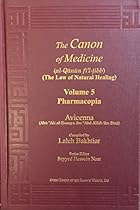
| Author | : | |
| Rating | : | 4.37 (533 Votes) |
| Asin | : | 1567448585 |
| Format Type | : | paperback |
| Number of Pages | : | 1016 Pages |
| Publish Date | : | 2015-08-21 |
| Language | : | English |

DESCRIPTION:
The first Latin translation of the Canon was by Gerard de Cremona the greatest translator of the school of Toledo in the late 12th century. --Najmabadi, History of Medicine in Iranboth in the Islamic world and Europe was greatly under the influence of Avicenna medicine with the focus on his great Canon. Third, one can only marvel at the relative neglect with which medical historians and philosophers alike have treated Avicenna s medical writings. We can draw three main conclusions from a short overview of Avicenna s medical writings. It can only be hoped that future historians of medicine will close this conspicuous gap, and investigate Avicenna s medical oeuvre much more fully. First, these works, and especially the Canon, offer rich pickings . The Poem on Medicine (al-Urj za fi al-Tibb), now available in English translation, is the summary of Avicenna medicine in poetry form (including 1326 couplets). and Krakow in Poland. Andrea Alpago, the physician and orientalist, corrected and
He became a minister in the Buyuid Court of Shams al-Dawlah as well as the court physician. It was in Jurjan in 1012 that Avicenna wrote the beginning of his great medical text, The Canon (al-Qanun) on medicine. Once again Avicenna was obliged to migrate because of the unstable political conditions in Hamadan so he moved to Isfahan where he enjoyed a fifteen year period of peace, writing many of his m
This volume not only contains an index of its contents organized by healing properties, but also a comprehensive 400 page index of all five volumes based on the names of the natural healers and what they heal.. Volume 5 contains more than 800 pharmacologically tested complex formulas with thorough descriptions of their application and effectiveness. Avicenna divided Volume 5 into two parts. In Part 2 he includes the compound medications arranged according to treating diseases from head to toe that were based on his own experience and usage with patients. Part 1 contains the formulas for compound medications arranged according to the various types of preparations that he found in the previous medical books translated into Arabic from Greek and Syriac
Avicenna on the Formulas I was happy to find that Volume 5 actually lists more than 800 pharmacologically tested simple and complex drugs, including plant and mineral substances, with a thorough description of their application and effectiveness. For each one, Avicenna described their pharmaceutical actions from a range of twenty-two to thirty possibilities, including resolution, astringency and softening, and their specific properties according to a grid of eleven types of pathological conditions, diseases. To my surprise, this volume not only contains an index of the contents based on healing properties of the 800 natural pharmaceuticals